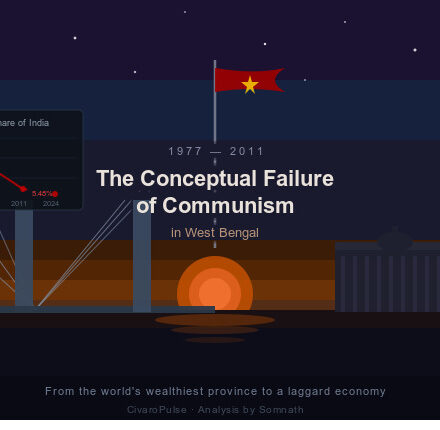
The Conceptual Failure of Communism in West Bengal: How an Ideology Broke an Economy?

I want to start with a number that should haunt every Bengali who cares about this state’s future but believer of Communism in West Bengal. “25 percent” That is Bengal’s approximate share of world GDP in the early 18th century. Not India’s share, the world’s. One province. One economy. One quarter of everything the entire world produced.
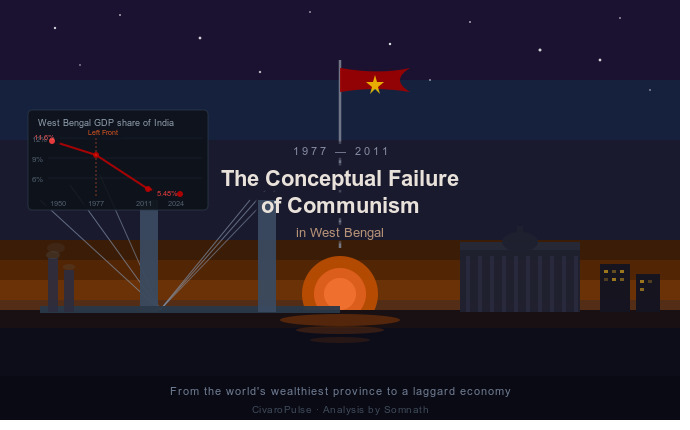
Today, West Bengal contributes 5.48 percent of India’s GDP, a country that itself represents barely 3.5 percent of world output. In three centuries, Bengal went from being the world’s economic crown to being a middle-ranked state in a developing nation, struggling to stay relevant in conversations about investment, growth, and industrial competitiveness.
I have studied this decline for years. And my conclusion which I will defend with data, with historical evidence, and with case studies, is this: communism and democracy cannot coexist successfully in a modern economy. West Bengal is not just a political story. It is a civilizational case study in what happens when ideology is placed above economic reality for 34 consecutive years.
| Bengal’s decline is not a mystery. It is a documented, predictable consequence of choosing an ideology that was fundamentally incompatible with the economic freedoms democracy promises. |
Bengal Before Colonial Rule – The Prosperous Heart of the World
To understand the tragedy of Bengal, you must first understand what Bengal was. Not the Bengal of clichéd poverty that colonial historians described to justify their presence. The real Bengal, the Bengal of the 17th and early 18th century was a civilization that the world came to trade with, not trade against.
In 1700, India contributed approximately 23 percent of global GDP as documented by economic historian Angus Maddison in his landmark study of world economic history. Within India, Bengal was the crown province contributing an estimated 25 percent of India’s own output, which made it roughly responsible for generating approximately 5 to 6 percent of all world production from a single geographic region. To put that in modern context: that is larger than the entire current GDP of France as a share of world output.
What Made Bengal So Wealthy?
Bengal’s prosperity was not accidental. It was built on three mutually reinforcing foundations that took centuries to develop and would take only decades to destroy.
First: Agricultural abundance. The Gangetic delta is one of the most naturally fertile river systems on the planet. Bengal’s farmers produced rice, silk, and jute in quantities that exceeded local consumption by enormous margins. Food security was not a problem, it was a given.
Second: Artisanal supremacy. The weavers of Murshidabad and Dhaka produced muslin so fine that colonial-era records describe it as ‘woven air’ fabric so light it could fit through a finger ring. This was not folk craft. This was industrial-grade textile production that dominated Asian trade routes and captured approximately 60 percent of British imports from Asia at its peak.
Third: Strategic trade geography. Bengal’s ports at Hooghly and Chittagong connected it to Arabia, China, Southeast Asia, and Europe simultaneously. Dhaka, with an estimated population exceeding one million at a time when London had roughly 700,000 residents, was among the largest cities on earth.
| Economist Angus Maddison described Bengal as ‘the richest province of the richest empire’ in his comprehensive study of pre-colonial Asian economies. The Mughal Subah of Bengal contributed more to imperial revenue than any other province, a documented fiscal dominance that reflected genuine productive capacity, not mere extraction. European trading companies competed fiercely for the right to establish Bengal trading posts, British, Dutch, French, Portuguese because Bengal’s market was simply too large and too profitable to ignore. |
Colonial Destruction – How British Policy Systematically Drained Bengal’s Wealth?
The East India Company’s victory at the Battle of Plassey in June 1757 is officially recorded as a military event. What it actually was, in economic terms, was the beginning of one of the largest wealth transfers in human history from Bengal to Britain conducted over nearly two centuries with the full machinery of state power.
I want to be clear about what I mean by ‘drain of wealth.’ This is not ideological language. It is the technical term used by economists to describe a specific phenomenon: surplus extraction from a colony that flows to the metropole without any equivalent return in goods, services, or investment. Historian R.C. Dutt systematically documented this process in his two-volume study of British economic policy in India, published in 1902 and the numbers he produced have not been seriously challenged since.
The Three Weapons of Colonial Economic Destruction
Weapon One: Monopolistic taxation. After Plassey, the East India Company acquired the Diwani rights the right to collect revenue across Bengal from the Mughal administration. What followed was not revenue collection but predatory extraction. Tax rates were increased sharply, often collected by force, and the resulting surplus was shipped to Britain rather than reinvested in Bengal’s economy.
Weapon Two: Destruction of indigenous industry. British textile manufacturers lobbied successfully for import duties on Indian textiles entering Britain, while simultaneously keeping the Indian market open to British goods. The result was precisely what was intended: Bengal’s handloom weavers could not compete with machine-made British cloth and were driven out of business by the millions. The Dhaka muslin industry which had supplied global markets for centuries collapsed within three decades of British commercial control.
Weapon Three: The Great Bengal Famine of 1770. This is where colonial extraction became outright catastrophe. The famine of 1770 killed an estimated 10 million people – approximately one-third of Bengal’s population at the time. But this was not merely a natural disaster. Tax collection continued during the famine. Rice was exported even as people starved. The Company’s revenue records show that collections actually increased in the year of the famine, as desperate farmers sold assets to pay taxes.
| India’s share of world GDP: 23% in 1700 → 4.2% by 1950 (Source: Angus Maddison, The World Economy: A Millennial Perspective) Bengal’s textile industry employed an estimated 2 million artisan weavers at its peak in the 18th century. By 1850, this number had fallen to under 100,000. British economist William Digby estimated the total drain from India during colonial rule at approximately £1 billion at 19th-century values, a figure that in modern purchasing power terms runs into trillions. The Great Bengal Famine of 1770: 10 million deaths. The 1943 Bengal Famine: 2-3 million deaths. Both occurred under conditions of colonial administration and deliberate policy choices. |
By the time India achieved independence in 1947, Bengal’s share of India’s GDP had already contracted dramatically from its pre-colonial position. The colonial period did not merely slow Bengal down, it structurally dismantled the industries, trade networks, and agricultural systems that had made Bengal prosperous. What communism would later inherit was already a wounded economy.
But here is the critical point I want to make: a wounded economy can recover – if given the right political and economic environment. Japan, South Korea, and Taiwan were all devastated by war and colonial exploitation in the 20th century. All three recovered and became global economic powers within 40 years. The reason Bengal did not recover is not colonialism. Colonialism ended in 1947. Bengal’s decline continued and accelerated because of what came next.
Partition – The Structural Wound That Never Fully Healed
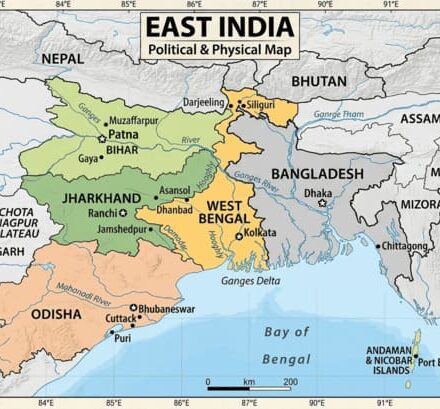
The partition of Bengal in August 1947 was not merely a political division, it was an economic amputation conducted without anesthesia. And it was designed, whether intentionally or through negligence, in a way that guaranteed structural dysfunction for West Bengal for decades.
Here is the specific economic problem partition created: the jute economy of undivided Bengal was an integrated system. The fields where raw jute was grown were overwhelmingly in East Bengal, the territory that became East Pakistan and later Bangladesh. The processing mills, the factories that cleaned, spun, and wove jute into sacking, rope, and packaging material were overwhelmingly in West Bengal, concentrated around Kolkata’s industrial belt.
Partition separated the fields from the factories. Raw material and processing infrastructure were assigned to different countries with immediate effect, no transition period, and no economic compensation mechanism. West Bengal’s jute mills which had been the industrial backbone of the region were suddenly cut off from their primary input supply. This was not manageable through market adjustments. It was a structural break that required massive capital investment to solve, at precisely the moment when the newly independent Indian government had almost no capital to spare.
The Refugee Crisis as an Economic Multiplier
Partition also triggered one of the largest forced migrations in human history. Between 1947 and 1971, an estimated 4 to 8 million refugees crossed from East Pakistan into West Bengal, the largest such influx into any Indian state. This was not simply a humanitarian crisis, though it was certainly that. It was an economic stress event of the first order.
Millions of people arrived with minimal assets, requiring immediate housing, food, employment, and social services in a state government that was already operating under severe fiscal constraints. The refugee population concentrated in Kolkata and its suburbs, straining infrastructure that had been built for a city of roughly 2 million and now had to accommodate nearly double that within years.
| West Bengal’s share of India’s GDP in 1950-51: 11.6%, second highest among all states, reflecting the residual strength of its industrial base. Refugee influx into West Bengal 1947-1971: estimated 4-8 million people across multiple waves of migration. Jute processing capacity in West Bengal circa 1947: approximately 67 out of 108 jute mills in undivided Bengal, all now dependent on imported raw material from a neighboring country. |
Yet, and this is important even after partition and the refugee crisis, West Bengal in 1950-51 was still India’s second most economically significant state. Its GDP share of 11.6 percent was not that of a defeated or broken economy. It was the share of a state that retained manufacturing capacity, skilled labour, an educated middle class, and a major port city. The economic foundation was damaged but not destroyed. Recovery was genuinely possible.
| West Bengal in 1950 was a wounded giant still capable of standing, still capable of running, if given the right conditions. What it was given instead was communism. |
Central Government Neglect – The Post-Independence Betrayal
Before I discuss communism’s role in West Bengal’s decline, I need to be intellectually honest about something: the Indian central government also failed West Bengal, particularly in the 1950s and 1960s. Any analysis that attributes Bengal’s decline entirely to the Left Front without acknowledging this is incomplete.
Post-independence economic planning in India was heavily centralised through the Planning Commission. The allocation of public investment in railways, ports, heavy industry, and infrastructure reflected political calculations as much as economic ones. And West Bengal, for a variety of reasons including the dominance of other regional political blocs in the national government, received less than its proportionate share of central investment during the critical decades of the 1950s and 1960s.
Three Specific Failures of Central Policy
Railway freight routing: Post-independence rail network planning gradually shifted freight corridors away from the Kolkata-centric routes that had dominated colonial-era transport. New manufacturing zones being developed in Maharashtra, Gujarat, and Tamil Nadu received priority infrastructure investment, while Bengal’s existing rail network aged without proportionate renewal.
Mineral and resource policy: Bengal is adjacent to some of India’s richest mineral deposits, iron ore, coal, and manganese in what are now Jharkhand and Odisha. Post-independence development of these resources prioritised new steel towns in those states (Bokaro, Rourkela, Bhilai) rather than expanding Bengal’s existing industrial capacity at Durgapur and Asansol.
Port policy: Kolkata’s port, once the dominant commercial gateway of India lost ground to Mumbai and later Chennai as central investment shifted. The silting of the Hooghly River, which progressively reduced Kolkata’s port capacity, required sustained dredging investment. This investment was inconsistent and insufficient.
| Economist Amartya Sen’s analysis of Bengal’s post-independence economic trajectory noted that central government industrial policy systematically underinvested in Bengal’s manufacturing sector relative to its existing capacity and skilled labour base. Bengal’s GDP share declined from 11.6% in 1950-51 to approximately 9-10% by the early 1970s – a period BEFORE the Left Front came to power. This pre-communist decline is real and must be acknowledged. But it is the rate of decline after 1977 that reveals communism’s specific and additional damage. |
I acknowledge all of this because intellectual honesty demands it. Central neglect was real. But here is the counterargument I make firmly: the states that received similarly inadequate central investment in the 1950s and 1960s, Rajasthan, Odisha, Madhya Pradesh eventually recovered and grew once they opened their economies to private investment and market forces. West Bengal, under Left Front governance, chose a different path. And that choice had consequences.
Political Chaos of the 1970s – How Communism Found Its Opening?
To understand why communism found such fertile ground in West Bengal in the mid-1970s, you need to understand just how completely the mainstream political establishment had failed ordinary Bengalis in the decade preceding 1977.
The 1970s in Bengal were marked by extraordinary political turbulence. Congress governments in the state collapsed and were replaced in rapid succession. President’s Rule was imposed multiple times. Naxalite violence claimed lives across the state. The refugee crisis from Bangladesh’s Liberation War in 1971 added nearly 10 million temporary refugees many of whom never fully returned to an already strained economy.
Then came Indira Gandhi’s Emergency declaration in June 1975. For the 21 months of the Emergency, democratic rights were suspended across India. Press censorship was enforced. Political opponents were imprisoned. Civil liberties were extinguished by executive decree. For Bengalis a population with a particularly deep cultural attachment to intellectual freedom, political debate, and artistic expression, the Emergency was not merely a political inconvenience. It was a civilizational insult.
The communists of the CPI(M) opposed the Emergency. They were imprisoned, harassed, and persecuted for it. When democracy was restored in 1977 and elections were held, West Bengal’s voters delivered a verdict that was as much emotional as rational. The Left Front won a landslide. The CPI(M) had earned it — not through economic policy, but through political courage at a moment of national crisis.
| The Left Front came to power in 1977 not primarily because of its economic programme. It came to power because everything else had failed so visibly, so completely, and so painfully. |
34 Years of Left Front Rule – The Rise, the Contradiction, and the Collapse
The Left Front government that came to power in West Bengal in 1977 was, at its founding, genuinely reformist. I want to say that clearly because intellectual honesty requires it. The early years of Left Front governance produced real changes that materially improved the lives of millions of rural Bengalis.
The Early Reforms That Worked
Operation Barga (1978): This was the flagship land reform initiative. The Left Front government systematically registered sharecroppers – bargas across West Bengal’s rural districts, giving them legal tenancy rights and security against eviction. Approximately 1.5 million sharecroppers were registered in the first wave alone. Agricultural productivity in West Bengal increased measurably in the early 1980s as a direct result. This was genuine, positive change.
Panchayati Raj Strengthening: The Left Front decentralised considerable administrative and financial power to rural local bodies. Gram panchayats in West Bengal became genuinely functional units of local governance in a way that most Indian states did not achieve until the constitutional amendments of 1992 made it mandatory.
Abolition of zamindari remnants: Though the formal zamindari system had been abolished before the Left Front took power, numerous intermediary landlord practices remained. The Left Front systematically dismantled these, reducing the economic and social power of rural elite classes and distributing economic opportunity more broadly.
Then the Contradiction Became Impossible to Hide
Here is where the fundamental incompatibility of communism with a democratic, market economy became unavoidable. The Left Front had won power by promising to represent the working class urban industrial workers and rural agricultural labourers. Its political identity and its electoral base were built on the premise that capital was the enemy of labour.
But governing a modern economy requires capital. It requires factories, which require investors. It requires jobs, which require entrepreneurs. It requires tax revenue, which requires profitable businesses. The Left Front tried to govern an economy while systematically making that economy unattractive to the investment it needed. This is not political criticism — it is a structural analysis of an inherent ideological contradiction.
The specific mechanisms of capital flight from West Bengal during the Left Front years are well documented. Trade union militancy, endorsed and often organised by CPI(M) party structures, made labour costs and labour relations in West Bengal factories significantly worse than in competing states. An entrepreneur choosing between building a factory in West Bengal and building one in Gujarat or Maharashtra was choosing between a location where party-controlled unions would maximise disruption and one where they would not. Most chose not to come to West Bengal.
Singur – The Contradiction Made Visible
In 2006, the Tata Group announced plans to build the factory for its Nano small car in Singur, Hooghly district — approximately 40 kilometres from Kolkata. The project would have brought an estimated 10,000 direct jobs and perhaps three times that in downstream employment. Chief Minister Buddhadeb Bhattacharjee personally championed the project as evidence that the Left Front could attract modern industry.
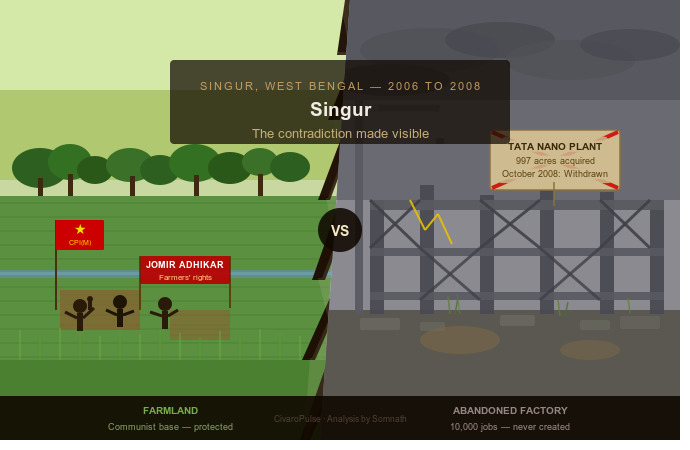
What happened next was the Left Front’s fundamental contradiction playing out in real time. The government acquired approximately 997 acres of agricultural land for the factory — land that included plots belonging to unwilling sellers. Protests erupted. And who led them? Mamata Banerjee’s Trinamool Congress — positioning itself as the defender of farmers against the same Left Front government that had built its entire political identity on protecting agricultural workers.
The Tata Group withdrew the project in October 2008 and relocated the Nano factory to Sanand, Gujarat, where it was operational within months. The message to every other potential investor in India was unmistakable: West Bengal is not a safe place to build a factory. The ideological children of the ‘workers’ party’ had just destroyed thousands of workers’ jobs to score a political point.
Nandigram – Where Ideology Met Its Victims
Six months before the Tata Nano crisis peaked, Nandigram happened. In January 2007, the Left Front government announced plans to acquire approximately 25,000 acres in Nandigram, East Midnapore, for a chemical industrial hub. The local population largely agricultural, many of them former Left Front voters resisted.

On March 14, 2007, West Bengal Police and alleged CPI(M) cadres opened fire on protesting villagers. Official accounts acknowledged 14 deaths. Independent accounts suggested higher casualties. Hundreds were injured. The event was broadcast nationally and internationally, and the image it created of the Left Front a party that used lethal force against the farmers it claimed to protect, to acquire land for an industrial project it claimed to oppose on ideological grounds — was one from which the CPI(M) in West Bengal never fully recovered.
| Singur 2008: Tata Motors withdraws the Nano factory after political agitation. The project relocates to Gujarat. Nandigram 2007: Police firing on protesting farmers. The government that built its identity on farmer protection used state force against farmers. Both events exposed the same truth: communist governance in a democratic framework cannot resolve the contradiction between ideology and economic necessity without breaking one or the other or both. |
The Numbers That Don’t Lie – Bengal’s Economic Decline in Data
I want to move from narrative to numbers now, because numbers are where arguments either hold or collapse. The data on West Bengal’s economic performance over the past 75 years is consistent, well-sourced, and tells a story that requires no embellishment.
GDP Share: The Long Decline
| Period | WB Share of India GDP | Context / Key Event |
| 1950-51 | 11.6% | Post-partition. 2nd highest among all states. |
| 1960s | ~10-11% | Pre-Left Front. Central neglect begins to bite. |
| 1977 | ~9-10% | Left Front takes power. Decline continuing. |
| 1990 | ~7-8% | Post-liberalisation. WB does not participate. |
| 2005 | ~6.5% | Singur & Nandigram era. Investment collapses. |
| 2010 | ~6.0% | Final year of Left Front. 34-year legacy visible. |
| 2023-24 | 5.48% | ₹16.5 lakh crore GSDP. 6th among states. |
Per Capita Income: Falling Behind the Nation
| Year | West Bengal | National Average | Gap |
| 1980 | ₹2,000 | ₹2,200 | -9% |
| 1990 | ₹10,000 | ₹12,000 | -17% |
| 2000 | ₹28,000 | ₹32,000 | -12% |
| 2010 | ₹54,000 | ₹65,000 | -17% |
| 2023-24 | ₹1.66 lakh | ₹2.08 lakh | -20% |
Manufacturing: The Hollowing Out of Industrial Bengal
| Year | Manufacturing % of GSDP | Significance |
| 1950 | ~35% | Jute mills, engineering, heavy industry dominant. |
| 1970 | ~25% | Capital flight and industrial stagnation begins. |
| 1990 | ~18% | Post-liberalisation manufacturing exodus. |
| 2005-10 | ~14% | Singur-Nandigram. Investment confidence collapses. |
| 2023 | ~12% | Services dominate. Manufacturing continues to shrink. |
Brain Drain: The Talent That Left and Did Not Return
| Over 30% of engineers and IT graduates from West Bengal now work outside the state — primarily in Bengaluru, Hyderabad, Pune, and Mumbai. Kolkata’s share of national startup registrations: under 3%, despite having one of India’s largest concentrations of engineering colleges and science institutions. West Bengal’s rank among states in Ease of Doing Business: consistently in the bottom quartile throughout the 2000s and 2010s. Net out-migration from West Bengal: the state has been a consistent source of economic migrants to other states for four decades, a pattern characteristic of economies that cannot generate adequate employment for their working-age population. |
What these numbers show, collectively, is not a state that stagnated. It is a state that actively fell behind. India’s economy grew significantly after 1991 liberalisation. States like Gujarat, Maharashtra, Tamil Nadu, Karnataka, and even Rajasthan and Odisha participated in that growth. West Bengal, under Left Front governance, made choices ideological choices that excluded it from participation. By the time the Left Front fell in 2011, the gap had become structural, not merely cyclical.
External Factors and Why Communism Amplified Every One of Them?
I have been arguing throughout this essay that communism bears primary responsibility for West Bengal’s economic decline. I want to now directly address the counter-argument that is always made: that Bengal’s problems were largely external colonial damage, partition, central government neglect and that the Left Front was dealt a bad hand.
This argument has some validity. I have already acknowledged it in the chapters on colonialism and central neglect. But validity is not the same as sufficiency. Let me explain why this counter-argument, while partially true, ultimately fails.
The States That Had Similar Problems and Recovered Differently
Karnataka in the 1960s was not a wealthy state. It lacked Bengal’s industrial base, its port infrastructure, its educated middle class, or its pre-existing manufacturing capacity. It also faced central government investment patterns that were not designed for its benefit. Today, Karnataka is home to India’s technology industry, contributes approximately 8 percent of India’s GDP, and attracts more foreign investment than West Bengal has in the past 40 years combined.
Odisha was, by any measure, one of India’s poorest states in 1970. It has mineral wealth adjacent to West Bengal. It faces similar geographic constraints. It had similar levels of rural poverty. Under a succession of non-communist governments in the 1990s and 2000s, Odisha reformed its land acquisition policy, streamlined industrial clearances, and actively courted investment. Today, Odisha is among India’s fastest-growing states and a major destination for steel and mining investment.
The difference between these states and West Bengal is not geography, colonial history, or central government policy. The difference is governance philosophy. When other states were opening their economies, simplifying their regulatory environments, and competing aggressively for private investment after 1991, West Bengal was ideologically committed to a worldview that saw private capital as the enemy.
The 1991 Liberalization – The Fork in the Road
India’s economic liberalization in 1991 was a defining moment. It was the fork in the road where states had to choose: participate in the new economy or hold to existing frameworks. The states that participated Gujarat, Maharashtra, Karnataka, Tamil Nadu, Andhra Pradesh began their trajectories of growth in the 1990s that they have sustained largely to this day.
West Bengal actively chose not to participate. The Left Front government’s response to liberalization was hostility. Chief Minister Jyoti Basu described the liberalization as ‘anti-people.’ The government maintained labour laws that made hiring and firing workers more difficult than anywhere else in India. It maintained regulatory frameworks that were explicitly designed to limit the power of private capital.
Economist Bibek Debroy, who has studied Bengal’s economy in detail, documented that the state’s refusal to reform labour laws and simplify industrial permissions was a direct cause of its failure to attract the manufacturing investment that transformed other states in the 1990s and 2000s. This was not a reaction to external circumstances. It was a deliberate, ideologically motivated policy choice.
| The same global economic conditions 1991 liberalization, growing foreign investment into India, rising manufacturing demand that accelerated growth in Gujarat, Tamil Nadu, and Karnataka were available to West Bengal. The external constraints colonial history, partition damage, central neglect were not unique to West Bengal. Several peer states faced similar constraints. The specific factor that distinguishes West Bengal’s trajectory from its peers is 34 years of ideologically driven governance that prioritized labour protection over investment attraction, electoral arithmetic over economic reform, and ideological consistency over economic pragmatism. |
After the Red Flag – What Remains and What It Tells Us?
Mamata Banerjee’s Trinamool Congress swept to power in May 2011 with a mandate for change. After 34 years of Left Front governance, West Bengal’s voters delivered a verdict that was overwhelming in its clarity: 184 seats for the Trinamool Congress, 62 for the Left Front. The red flag that had flown over Writers’ Building for 34 years came down.
What the new government inherited was not simply a political office. It inherited an economy structurally skewed toward services and away from manufacturing, a bureaucratic culture shaped by decades of party-controlled administration, labour relations damaged by decades of ideologically charged industrial conflict, and an investor perception of West Bengal as a hostile business environment that took years of active effort to begin reversing. but i will describe why the same was not happened in my next blog
The Structural Damage That Outlasted the Left Front
Here is what structural economic damage means in practice: it is not damage that reverses when the government changes. It is damage embedded in the physical infrastructure, the institutional culture, the human capital, and the investor perception of a place.
- Physical infrastructure: Decades of underinvestment in industrial infrastructure, roads, power supply, logistics created a real capability gap that required years and billions of rupees to address.
- Institutional culture: A bureaucracy that had operated for 34 years within a framework of party control and ideological hierarchy does not transform into an investment-friendly administration within an electoral cycle.
- Human capital drain: Talented engineers, managers, entrepreneurs, and professionals who left West Bengal in the 1980s and 1990s built careers and lives elsewhere. Most did not return when the government changed.
- Investor perception: Reputation, once damaged, rebuilds slowly. West Bengal’s reputation as an anti-business state took 34 years to create. It cannot be reversed in four.
The Trinamool government has made real progress in some areas, infrastructure investment has increased, some industrial projects have been attracted, the political climate has normalized in ways that would have been unthinkable under the Left Front. But the gap remains large and the structural challenges remain deep.
West Bengal’s per capita income remains approximately 20 percent below the national average in 2024. Its manufacturing share of GSDP continues to lag behind comparable states. Its share of national GDP continues to decline in relative terms. These are the economic consequences of 34 years of communist governance – consequences that outlast the governance itself.
Editor’s Pick
-
 Read more: Standardized Excavation Measurement Benchmark – IS Code Explained
Standardized Excavation Measurement Benchmark – IS Code Explained
on
-
 Read more: Bar Bending Schedule Essentials: Common Errors and Practical Insights for Civil Engineering should help your Knowledge in 2026
Bar Bending Schedule Essentials: Common Errors and Practical Insights for Civil Engineering should help your Knowledge in 2026
on
-
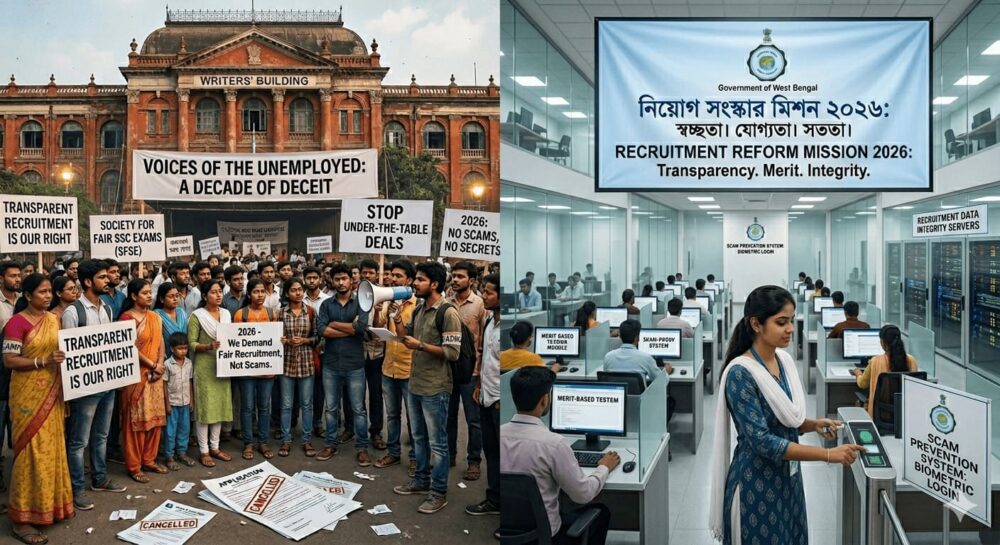 Read more: Recruitment Scams and the Promise of Reform in Govt of West Bengal 2026
Recruitment Scams and the Promise of Reform in Govt of West Bengal 2026
on
-
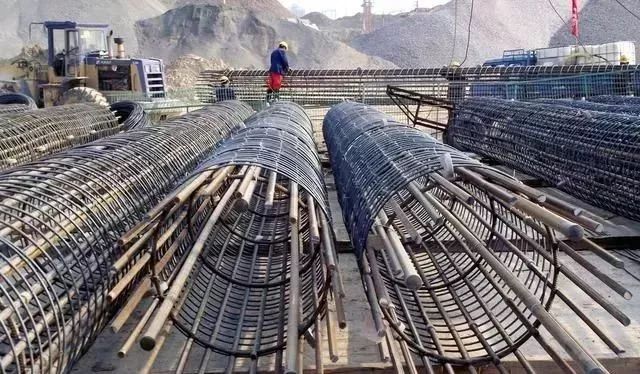 Read more: Pile Foundation: The Hidden Strength Beneath Every Structure Now even in 2026
Pile Foundation: The Hidden Strength Beneath Every Structure Now even in 2026
on
Why Communism and Democracy Cannot Coexist Successfully?
I have spent nine chapters building the evidence base for the argument I now want to make directly. Communism and democracy are not merely philosophically incompatible, they are structurally incompatible in the specific context of governing a modern market-integrated economy. West Bengal’s 34-year experiment demonstrates this incompatibility with a clarity that no theoretical argument could match.
The Structural Incompatibility: Three Core Tensions
Democratic politics requires electoral majorities; communist ideology demands class antagonism. To win elections in a democracy, a party needs to build the broadest possible coalition of voters. But communist ideology is built on the premise of class conflict, the working class against the capitalist class. These two imperatives are in permanent tension. The Left Front resolved this tension by building a patronage network that rewarded party loyalty rather than economic performance which is a recipe for corruption, not governance.
Economic growth requires capital investment; communist ideology positions capital as the enemy. Every economy that has achieved sustained growth in the modern era has done so through capital accumulation and productive investment. Communist ideology, in its applied form in West Bengal, treated private capital with hostility through militant trade unionism, regulatory obstruction, and political rhetoric that actively discouraged entrepreneurship. The result was precisely what economic logic predicts: capital went elsewhere.
Long-term governance requires economic sustainability; communist governance optimized for electoral cycles. The Left Front’s land reforms and rural patronage networks were excellent short-term electoral strategies. They built a loyal rural voter base that sustained Left Front governments for 34 years. But they were poor long-term economic strategies. By sacrificing industrial growth to protect agricultural constituencies, the Left Front won 34 elections while losing the economic future of 90 million people.
The Democratic Paradox of Communist Rule
There is a profound paradox in the Left Front’s democratic success: they were too good at democracy to implement communism effectively, and too committed to communism to implement democracy’s economic promises. They used democratic electoral mechanisms to sustain political power while simultaneously using ideological commitments to block the economic reforms that democracy’s citizens needed.
This is not a paradox unique to West Bengal. It has played out in every democracy where communist parties have held sustained governmental power in Kerala, in parts of Europe, in various Latin American countries. The pattern is consistent: initial social reforms that improve conditions for the poorest, followed by ideological rigidity that prevents adaptation to changing economic realities, followed by long-term stagnation that betrays the very people the ideology claimed to serve.
| The greatest victims of communism in West Bengal were not the capitalists it targeted. They simply took their money elsewhere. The greatest victims were the workers it claimed to protect who were denied the jobs, industries, and opportunities that would have given them real economic agency. |
What West Bengal Could Have Been
I want to end this chapter with a counterfactual not as speculation, but as a way of measuring the scale of what was lost. If West Bengal had maintained its 1950 share of India’s GDP through to 2024, it would today be contributing approximately 11 percent of a national economy that has grown enormously in the intervening 74 years. Instead of a ₹16.5 lakh crore GSDP, West Bengal would have a GSDP approaching ₹35 to 40 lakh crore.
That difference between what West Bengal is and what West Bengal could have been is the economic cost of 34 years of ideological governance. It is measured not just in rupees but in careers never built, factories never opened, technologies never developed, and a generation of talented Bengalis who had to leave their home state to find the opportunities their state’s government chose not to create.
The Lesson Bengal Teaches the World
Bengal was the world’s wealthiest province before colonial rule stripped it bare. It was still India’s second-largest economy when independence arrived in 1947. It had the educated workforce, the industrial base, the intellectual tradition, and the cultural vitality to become one of Asia’s great economic success stories.
It did not become that story because for 34 years it was governed by an ideology that placed class warfare above economic opportunity, that saw investment as exploitation rather than as the engine of prosperity, and that used democratic processes to perpetuate an anti-democratic economic order in which the party controlled not just politics but industry, labour, and civil society.
The lesson West Bengal teaches and it is a lesson that matters wherever in the world communist parties seek democratic power is this: you cannot use democracy as a vehicle to impose communism and expect economic success. The two systems rest on fundamentally different assumptions about human motivation, about the role of capital, and about the relationship between state power and individual economic freedom.
When those two systems collide in the same government, it is always the economy that loses. And it is always the ordinary people — the workers, the farmers, the engineers, the entrepreneurs who pay the price. Bengal paid that price for 34 years. It is still paying it today.
| History does not repeat itself. But it rhymes loudly enough for those willing to listen. Bengal’s story is a rhyme worth memorizing — before another generation is forced to live it. Now BJP has came in to power in West Bengal after defeating Trinamool Congress after 15 Years. CM Subhendu Adhikari taking some bold decisions right now. keep eye on the current situation by Click Here |
Frequently Asked Questions: Communism in West Bengal
| Question | Answer |
| Q1. Why did communism fail in West Bengal? | Communism in West Bengal failed because its core ideology — hostility to private capital and trade union militancy — made the state unattractive to investment at precisely the period (1977-2011) when India’s other states were growing through market liberalisation. The ideology preserved electoral majorities while destroying economic opportunity. |
| Q2. What was West Bengal’s GDP share before communist rule? | West Bengal contributed approximately 11.6% of India’s GDP in 1950-51, making it the second highest contributor among all states. By the end of the Left Front’s 34-year rule in 2011, this had fallen to approximately 6%. |
| Q3. Can communism and democracy coexist successfully? | The West Bengal experience suggests they cannot — not in a modern market economy. Democratic elections require broad coalitions, but communist ideology requires class antagonism. Economic growth requires capital investment, but communist ideology treats capital as the enemy. These contradictions cannot be sustainably resolved. |
| Q4. What was West Bengal’s GDP share of the world before colonialism? | Bengal contributed approximately 25% of India’s GDP in the early 18th century, when India’s own share of world GDP was approximately 23%. This made Bengal responsible for roughly 5-6% of all world economic output — equivalent in relative terms to a major modern economy. |
| Q5. What was Operation Barga and did it succeed? | Operation Barga (1978) was the Left Front’s flagship land reform that registered approximately 1.5 million sharecroppers, giving them legal tenancy rights and protection from eviction. It succeeded in its immediate goal — agricultural productivity rose in the early 1980s. But it was not accompanied by industrial development that could have absorbed Bengal’s growing labour force. |
| Q6. What happened at Singur and why does it matter? | In 2008, Tata Motors withdrew its Nano car factory from Singur, West Bengal, after political agitation made the project untenable. The factory relocated to Gujarat. Singur became the defining symbol of West Bengal’s inability to attract and retain industry — even when the Left Front government itself tried to bring it in. |
| Q7. How did the 1947 Partition affect West Bengal’s economy? | Partition separated jute fields (which went to East Pakistan/Bangladesh) from jute processing mills (which remained in West Bengal), destroying the integrated jute economy. It also triggered refugee influxes of 4-8 million people between 1947 and 1971, straining housing, employment, and public services. |
| Q8. What is West Bengal’s current per capita income? | West Bengal’s per capita income in 2023-24 is approximately ₹1.66 lakh — approximately 20% below the national average of ₹2.08 lakh. This gap has widened consistently over the past four decades, from 9% below average in 1980 to 20% below in 2024. |
| Q9. How did communism affect Bengal’s manufacturing sector? | Manufacturing as a share of West Bengal’s GSDP fell from approximately 35% in 1950 to approximately 12% by 2023. Trade union militancy, regulatory hostility to private enterprise, and the Left Front’s ideological opposition to capital were the primary causes of this structural deindustrialisation. |
| Q10. What was the impact of India’s 1991 liberalisation on West Bengal? | India’s 1991 economic liberalisation transformed states that embraced it — Gujarat, Karnataka, Tamil Nadu, Maharashtra. West Bengal’s Left Front government responded to liberalisation with hostility, maintaining restrictive labour laws and ideological opposition to private capital. West Bengal was largely excluded from the growth that followed 1991. |
| Q11. Why did talented people leave West Bengal? | Economic migrants — engineers, IT professionals, entrepreneurs, managers — left West Bengal because the state’s economy, stunted by 34 years of anti-investment governance, could not generate sufficient employment at the skill and compensation levels they could obtain in Maharashtra, Karnataka, or overseas. Over 30% of Bengal’s engineering graduates now work outside the state. |
| Q12. Was the Left Front’s economic failure entirely its own fault? | No — and intellectual honesty requires acknowledging this. Colonial damage, partition shock, and post-independence central government underinvestment all contributed to Bengal’s challenges before the Left Front came to power. But peer states with similar external constraints recovered through market-oriented governance. West Bengal’s additional decline after 1977 is specifically attributable to communist economic policy. |
| Q13. What was the Great Bengal Famine and was colonialism responsible? | The Great Bengal Famine of 1770 killed approximately 10 million people — one-third of Bengal’s population. Tax collection continued during the famine and rice was exported while people starved. This was not merely a natural disaster; colonial extraction policies directly contributed to its severity. The 1943 Bengal Famine (2-3 million deaths) similarly reflected policy failures under colonial administration. |
| Q14. What is West Bengal’s current GDP share of India? | In 2023-24, West Bengal contributes approximately 5.48% of India’s GDP, with a GSDP of approximately ₹16.5 lakh crore. This ranks West Bengal 6th among Indian states — a significant fall from 2nd position in 1950-51. |
| Q15. What is the core lesson of West Bengal’s economic history? | The core lesson is that ideology without economic pragmatism destroys prosperity. Bengal was the world’s wealthiest province, then India’s second richest economy. It declined because colonial exploitation was followed by ideological governance that prioritised class warfare over economic development. The greatest victims of this ideology were the workers and farmers it claimed to serve. |
-
The Conceptual Failure of Communism in West Bengal: How an Ideology Broke an Economy?
By
I want to start with a number that should haunt every Bengali who cares about this state’s future but believer of Communism in West Bengal.…
-
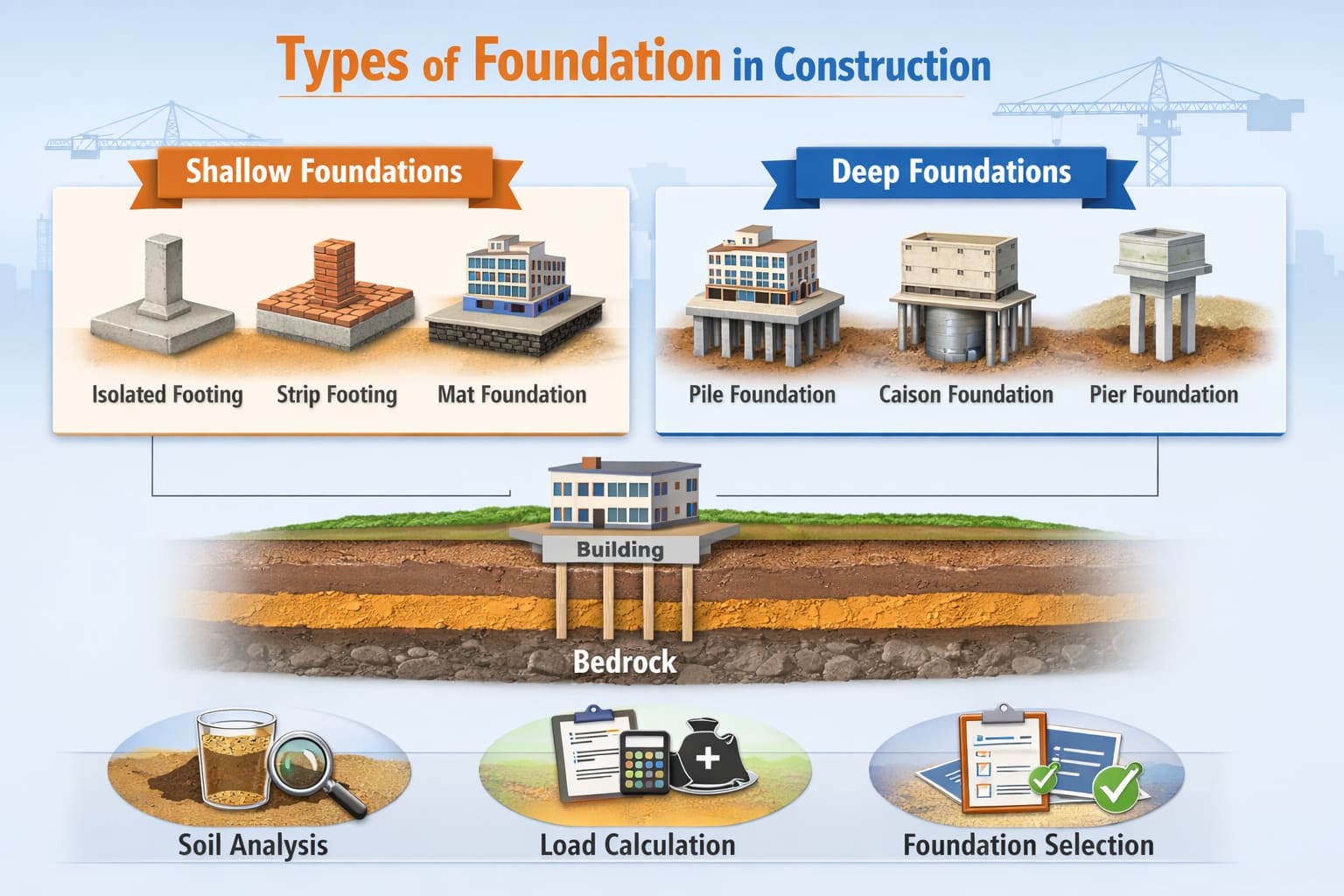
Types of Foundation in Construction: A Complete Technical Guide for Your Positive Self Development
By
When I first started reviewing construction projects in Mumbai, I quickly realised that the one thing every engineer talks about but very few people truly…
-

Billing Process in Construction Projects: The Complete Guide Every Civil Engineer Must Know & Improve in 2026
By
The Problem No One Talks About Openly If you have ever stood at a construction site on the last working day of the month, surrounded…
-
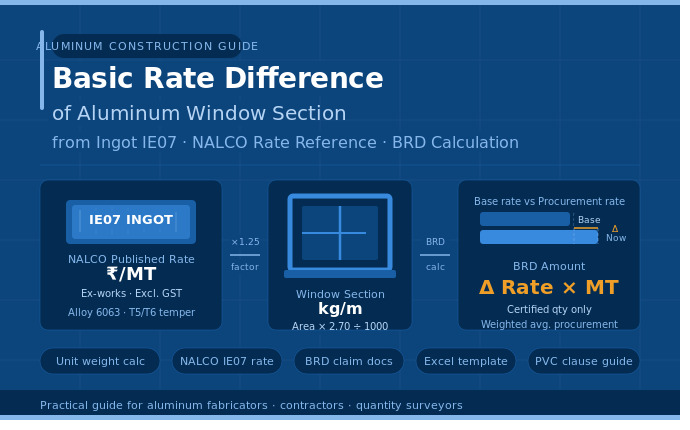
Basic Rate Difference of Aluminum Window Section from Ingot IE07: A Complete Guide to BRD Calculation, NALCO Rate Reference
By
If you are working in aluminum fabrication, construction procurement, or cost estimation, understanding the basic rate difference of aluminum window section from ingot IE07 is…
-

Self‑Healing Concrete (Bio‑Concrete): Concrete That Repairs Its Own Cracks
By
Why this topic matters in real projects? In most civil projects, concrete doesn’t fail suddenly—it fails slowly. The slow failure starts with something that looks…
-

The Ultimate Run Apocalypse: Why Teams Are Scoring So Heavily This IPL Season
By
The modern cricket landscape is witnessing a structural shift that has shattered historical data, outpaced tactical coaching systems, and permanently rewired how players handle bat…
📆