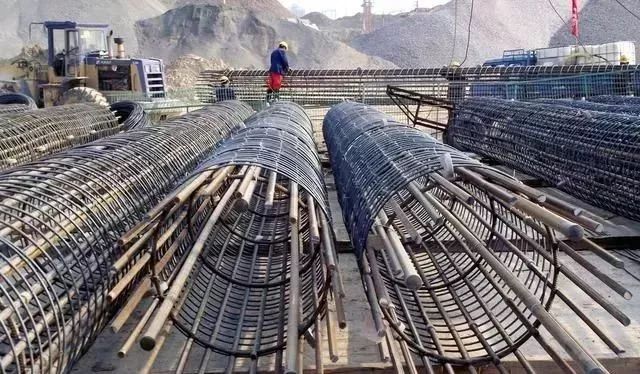

When I think about construction, one truth always stands out: no building, bridge, or tower can rise with confidence unless its foundation is strong. And in modern civil engineering, that strength often comes from the pile foundation. For me, pile foundation is not just a technical solution; it is the invisible force that makes our structures safe, durable, and resilient against time and nature.
What is Pile Foundation in Construction?
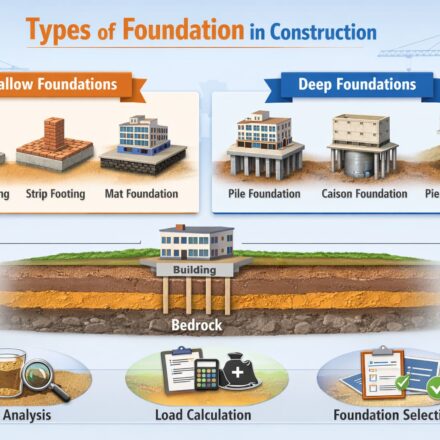
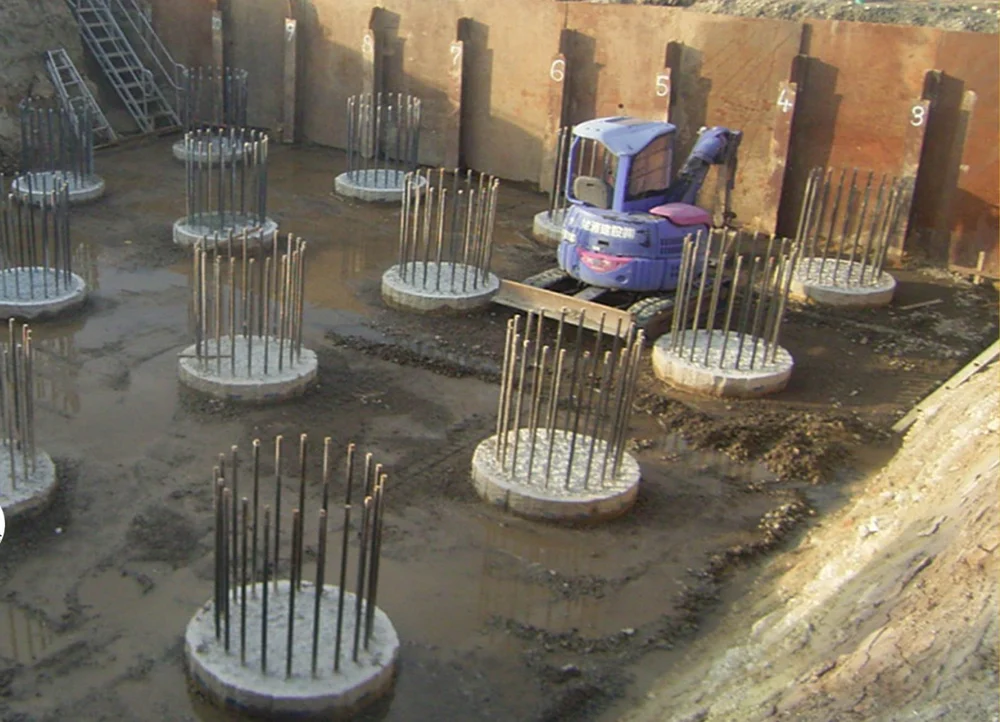
A pile foundation is a deep foundation system made of long, slender columns – usually steel, concrete, or timber – driven or bored into the ground. Its purpose is simple yet powerful: to transfer the load of a structure through weak soil layers into stronger, more stable soil or rock beneath.
In my view, pile foundation is the answer when the ground cannot be trusted. It is the engineer’s way of saying: “We will not compromise stability, no matter how weak the surface soil may be.”
Why Pile Foundation Matters
The importance of pile foundation lies in its ability to:
- Support heavy loads where shallow foundations fail.
- Resist settlement in weak or compressible soils.
- Provide stability in coastal or flood‑prone areas.
- Anchor structures against lateral forces like wind and earthquakes.
For me, pile foundation represents trust. When I design or study a structure, I know that the unseen piles beneath are carrying the weight of human ambition.
Types of Pile Foundation
Civil engineering offers many types of pile foundation, each suited to specific ground conditions and project needs. Let’s explore them: Please refer IS 2911 (Part 1/Sec 1) : 2010
1. Driven Piles
Driven piles are hammered or vibrated into the soil. They can be made of timber, precast concrete, or steel.
- Timber piles are eco‑friendly but limited in strength.
- Precast concrete piles are reinforced to withstand driving stresses.
- Steel piles (H‑section, tubular, or sheet piles) are versatile and widely used.
My opinion: driven piles are fast and effective, but they create vibrations, making them unsuitable for sensitive urban sites.
2. Bored Piles
Bored piles, also called drilled piles, involve boring large holes and filling them with concrete.
- They minimize settlement and are ideal for bridges and flood defenses.
- Under‑reamed bored piles create bulbs at the base for extra load capacity.
I find bored piles fascinating because they combine precision with strength. Unlike driven piles, they avoid disturbing the soil, which is crucial in dense cities.
3. Rotary Bored Piling
Used when obstructions exist underground. A temporary casing supports the borehole, reinforcement is added, and concrete fills the space.
This method shows how adaptable can be even in tough ground conditions.
4. Continuous Flight Auger (CFA) Piles
CFA piles are versatile and widely used. Concrete is pumped in as the auger is withdrawn, followed by reinforcement.
For me, CFA piles represent efficiency. They are quick, clean, and ideal for projects where time and precision matter.
5. Driven and Cast‑in‑Situ Piles
This hybrid method combines driven casing with cast‑in‑place concrete. The Franki type even creates a bulb at the base for added strength.
I see this as innovation in action blending the speed of driven piles with the adaptability of cast‑in‑situ methods. to understand how to prepare BBS for pile and its foundation click here
6. Aggregate Piles (Stone Columns)
Instead of concrete, compacted aggregate is used. Vibro or Geopier methods densify surrounding soil.
Aggregate piles are proof that pile foundation is not just about concrete and steel – sometimes, stone itself becomes the hero.
7. Sheet Piles
Interlocking steel sheets form walls for soil or water retention. Common in coastal protection and underground works.
I admire sheet piles for their sustainability; they can be reused, making them cost‑effective and eco‑friendly.
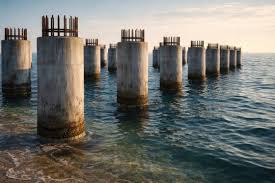
8. Timber Piles
The oldest form of pile foundation, used for piers, jetties, and sea defenses.
Though limited in bearing capacity, timber piles remind me of how ancient civilizations solved engineering challenges with simple materials.
Editor’s Pick
 Read more: Standardized Excavation Measurement Benchmark – IS Code Explained
Standardized Excavation Measurement Benchmark – IS Code Explained
on
- Read more: Bar Bending Schedule Essentials: Common Errors and Practical Insights for Civil Engineering should help your Knowledge in 2026
Bar Bending Schedule Essentials: Common Errors and Practical Insights for Civil Engineering should help your Knowledge in 2026
on
 Read more: Pile Foundation: The Hidden Strength Beneath Every Structure Now even in 2026
Pile Foundation: The Hidden Strength Beneath Every Structure Now even in 2026
on
 Read more: Basic Rate Difference ( BRD ) – Common Mistakes and Billing & Audit Red Flags
Basic Rate Difference ( BRD ) – Common Mistakes and Billing & Audit Red Flags
on

End‑Bearing vs Friction Piles
Two fundamental principles define pile foundation:
- End‑bearing piles transfer load directly to strong rock layers.
- Friction piles rely on skin friction between pile and soil.
In practice, both are often combined. I believe this duality is the beauty of pile foundation – it adapts to soil conditions, never forcing one solution.
Pile Foundation in Bridge Construction
Bridges demand extraordinary strength. Pile foundation supports abutments and piers, often using cofferdams in water.
For me, bridge piling is symbolic: it connects not just land to land, but engineering to imagination.
Safe Working Platforms
No discussion of pile foundation is complete without safety. Piling rigs are massive, and unsafe platforms can cause fatal accidents.
The Federation of Piling Specialists warns that one‑third of dangerous occurrences involve platforms. My opinion is clear: safety is not optional. A well‑designed piling platform is as important as the piles themselves.
History of Pile Foundation
From Swiss lake dwellers 6000 years ago to Roman bridges, pile foundation has always been humanity’s answer to weak soil.
I find this history inspiring. It shows that while materials and machines have evolved, the principle remains timeless: strong foundations make strong civilizations.
Modern Challenges and Innovations
Today, pile foundation faces challenges like:
- Urban density and vibration control.
- Environmental sustainability.
- Cost efficiency.
Innovations like CFA piles, geosynthetics in platforms, and advanced design software are reshaping the field. As an engineer, I believe embracing these innovations is vital for future projects.
My Personal Reflection
Whenever I study or design a pile foundation, I feel a sense of responsibility. These piles are invisible to the public, yet they carry the weight of lives, dreams, and progress.
To me, pile foundation is more than engineering. It is trust, resilience, and the silent promise that our structures will stand firm against time, nature, and uncertainty.
Conclusion
The story of pile foundation is the story of construction itself. From timber piles in ancient rivers to CFA piles in modern cities, the principle remains unchanged: when the ground is weak, we go deeper.
In my opinion, pile foundation is not just a technical necessity — it is the backbone of safe, sustainable, and visionary construction. As engineers, builders, and citizens, we must respect the unseen strength beneath our structures. Because without pile foundation, there is no foundation at all.