
How to Prepare a High-Value Civil Work Order: A Complete Practical Guide for Construction Contract

Introduction
In the construction industry, a Work Order (WO) is much more than a commercial document. It is the foundation upon which project execution, billing, auditing, cost control, procurement, planning, risk management, and dispute resolution are built.
Many engineers believe that preparing a work order is a simple exercise of mentioning quantities, rates, and contract value. In reality, a professionally prepared work order can save crores of rupees during project execution, while a poorly prepared work order can result in commercial disputes, uncontrolled variations, delayed payments, and significant financial losses.
- Multiple towers
- Podium construction
- Club house works
- Waterproofing works
- RCC superstructure
- Masonry and plaster
- Formwork
- Finishing activities
- Basic Rate Difference (BRD)
- Quantity variations
- Contract amendments
The preparation of such a work order requires a structured approach involving engineering, commercial, contracts, procurement, planning, and finance teams.

Understanding the Purpose of a Work Order
A work order serves five major purposes:
1. Commercial Governance
It defines:
- Contract value
- Scope of work
- BOQ rates
- Payment terms
- Statutory deductions
2. Technical Governance
It establishes:
- Technical specifications
- Approved materials
- Construction methodology
- Quality requirements

3. Legal Protection
The work order becomes the primary reference during:
- Claims
- Disputes
- Arbitrations
- Recovery actions
4. Billing Control
Every RA bill is verified against:
- BOQ quantities
- Approved rates
- Contract conditions
5. Audit Compliance
Internal audit teams verify:
- Scope compliance
- Quantity control
- Contractual obligations
Step 1: Define the Project Package
Before preparing the work order, clearly identify the package.
Example:
Project
Sky High residance ( Phase I), Santacruz, Mumbai
Package
General Civil Works including Waterproofing Works
Areas Covered
- Tower B
- Tower C
- Tower D
- Tower E
- Podium
- Club House
- Common Areas
This definition is critical because later billing and variation approvals are linked to these areas.

Step 2: Freeze Scope of Work
The most important section of a work order is the scope.
A typical civil package scope may include:
Earthwork
- Excavation
- Backfilling
- Soling
- Anti-termite treatment
Concrete Works
- PCC
- Plum Concrete
- RCC below podium
- RCC superstructure
Reinforcement
- Cutting
- Bending
- Binding
- Coupler installation
Formwork
- Conventional shuttering
- Aluminium formwork
Masonry
- AAC blocks
- Internal partitions
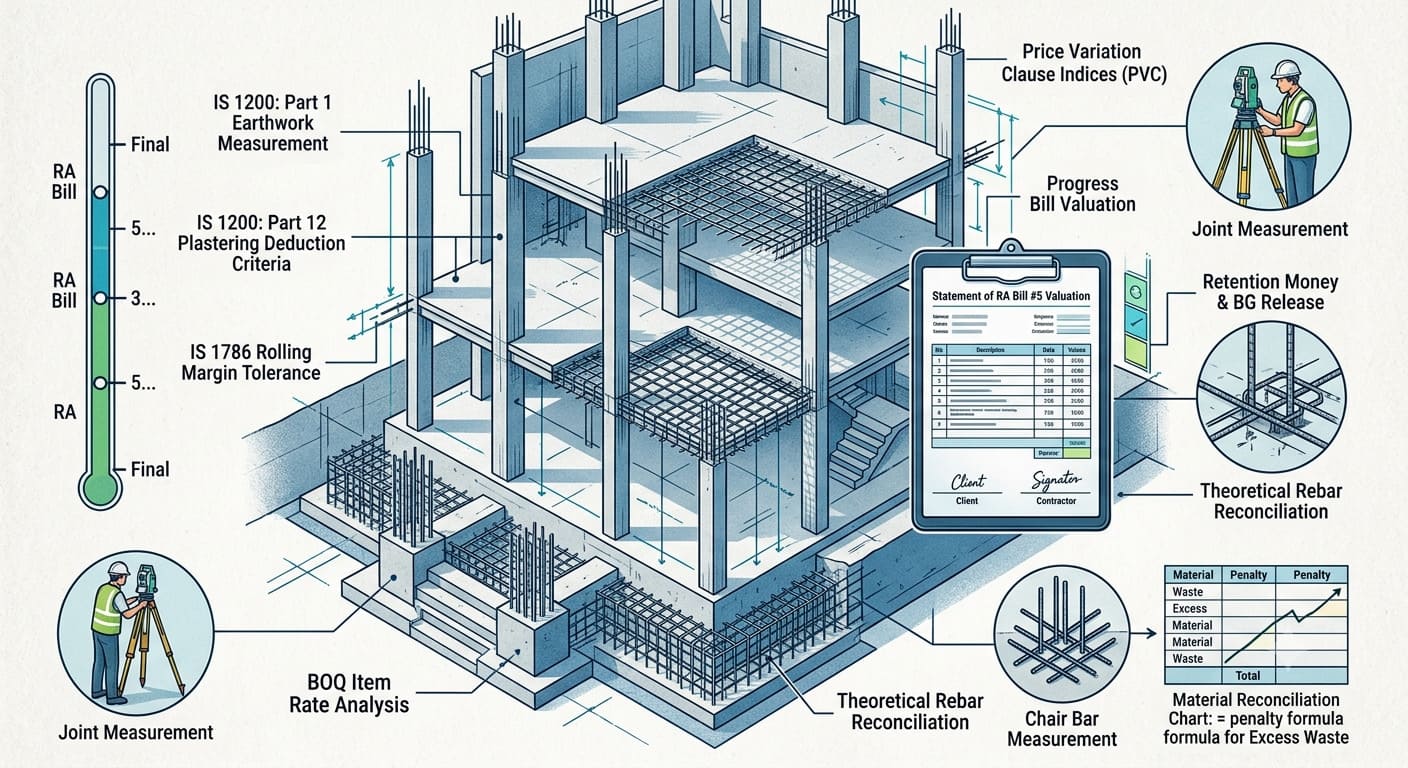

Waterproofing
- Toilets
- Balconies
- Terrace
- Water tanks
Finishing Works
- Plastering
- Putty
- Gypsum
Every activity should be clearly mentioned because vendors often claim that a particular activity is outside their scope.
Step 3: Prepare the Bill of Quantities (BOQ)
A BOQ is the commercial backbone of the work order.
Each item should contain:
| Description | Unit | Qty | Rate | Amount |
|---|---|---|---|---|
| Excavation | M3 | XXX | XXX | XXX |
| PCC | M3 | XXX | XXX | XXX |
| RCC | M3 | XXX | XXX | XXX |
For large projects, the BOQ is organized tower-wise.
Example:
- TB – Tower B
- TC – Tower C
- TD – Tower D
- TE – Tower E
- NTA – Non Tower Area
The purpose is to facilitate:
- Tower-wise cost control
- Budget monitoring
- Tower-wise profitability analysis
Step 4: Define Quantity Measurement Rules
Every BOQ item should include:
Unit of Measurement
Examples:
- RCC = Cubic Meter
- Reinforcement = MT
- Formwork = Sqm
- Plaster = Sqm
Measurement Methodology
For example:
RCC quantity shall be measured from approved RCC drawings.
Without measurement rules, disputes become inevitable.
Latest Articles

Standardized Excavation Measurement Benchmark – IS Code Explained
In civil engineering, precision in measurement is essential for accurate billing, auditing, and project control. The IS 1200 (Part 1) 1992 standard defines how earthwork should be measured, ensuring uniformity and reliability across all…

By
📆
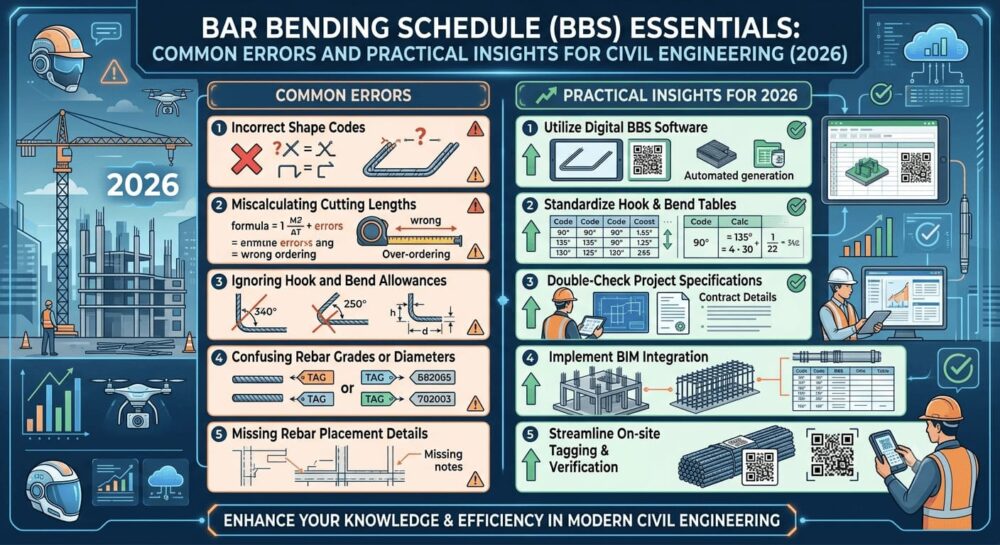
Bar Bending Schedule Essentials: Common Errors and Practical Insights for Civil Engineering should help your Knowledge in 2026
Understanding Unit Weight Error of Reinforcement Steel in Civil Engineering In civil engineering, precision in calculation is vital for accurate estimation and billing. One common area where minor discrepancies occur…
By
📆

Pile Foundation: The Hidden Strength Beneath Every Structure Now even in 2026
When I think about construction, one truth always stands out: no building, bridge, or tower can rise with confidence unless its foundation is strong. And in modern civil engineering, that…
By
📆


Step 5: Rate Analysis Verification
Before finalizing rates:
Labour Analysis
- Masons
- Helpers
- Bar benders
- Carpenters
Material Analysis
- Cement
- Steel
- Sand
- Aggregates
Machinery Analysis
- Excavators
- Tower cranes
- Pumps
Overheads
- Site supervision
- Safety
- Quality
Every rate must be checked for profitability and competitiveness.
***You can also read my article on the same topic for more clarity.
Step 6: Define Contract Value
The contract value should include:
BOQ Value
Example:
₹203.92 Crore
BRD Value
Basic Rate Difference
Example:
₹27.16 Crore
***You can also read my article on the same topic for more clarity.
Total Contract Value
₹231.08 Crore excluding GST.
This value becomes the reference for:
- Budget
- Billing
- Cost control
Step 7: Include Payment Terms
A professional work order clearly specifies:
Running Bill Payment
Example:
30 days after certification.
Final Bill Payment
Within specified period after completion.
Recovery Provisions
- Advance recovery
- Material reconciliation
- Debit notes
Without payment conditions, cash flow disputes emerge.
***You can also read my article on the same topic for more clarity.
Step 8: Define Secured Advance
Large contracts usually provide:
Cement Advance
Steel Advance
Example:
70% of material value may be paid as secured advance against approved materials delivered to site.
This helps contractors maintain working capital.
Step 9: Define Defect Liability Period
The DLP protects the client after project completion.
Typical provisions:
- 12 months
- 18 months
- 24 months
The Bayer contract specifies an 18-month defect liability period after virtual completion.
Editor’s Pick
- Read more: Standardized Excavation Measurement Benchmark – IS Code Explained
Standardized Excavation Measurement Benchmark – IS Code Explained
on
- Read more: Bar Bending Schedule Essentials: Common Errors and Practical Insights for Civil Engineering should help your Knowledge in 2026
Bar Bending Schedule Essentials: Common Errors and Practical Insights for Civil Engineering should help your Knowledge in 2026
on
- Read more: Pile Foundation: The Hidden Strength Beneath Every Structure Now even in 2026
Pile Foundation: The Hidden Strength Beneath Every Structure Now even in 2026
on
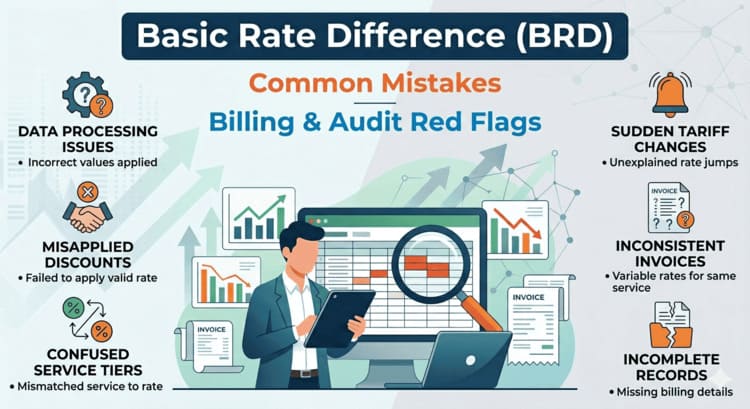
 Read more: Basic Rate Difference ( BRD ) – Common Mistakes and Billing & Audit Red Flags
Basic Rate Difference ( BRD ) – Common Mistakes and Billing & Audit Red Flags
on
Step 10: Define Billing Procedure
A proper work order must clearly state:
Documents Required
- Measurement sheets
- Abstract
- Material reconciliation
- Test reports
Certification Route
- Contractor
- Site Engineer
- Planning
- Billing
- Project Head
This workflow avoids unauthorized billing.
Step 11: Include Taxation Clauses
Mention:
GST
Payable extra as applicable. For more clarity you can read this visit this website CGST Rules | Goods and Services Tax Council
TDS
To be deducted as per law. For more clarity you can read this visit this website Tax Deduction at Source (TDS) – Income Tax
WCT
Where applicable. For more clarity you can read this visit this website WIPO Copyright Treaty (WCT)
Other Statutory Recoveries
Must be clearly defined.
Step 12: Provide Escalation and BRD Provisions
In long-duration projects:
Steel Price Changes
Cement Price Changes
Fuel Price Changes
The work order should specify:
- Base rate
- Escalation formula
- Frequency of reimbursement
This is commonly called BRD.
Step 13: Define Quality Requirements
Every item should refer to:
- IS Codes
- Project Specifications
- Approved Drawings
Examples:
Concrete
IS 456
Reinforcement
IS 1786
Formwork
Project specifications
Quality obligations protect the client against poor workmanship.
Step 14: Include Safety Clause
Safety requirements should mandate:
- PPE
- Safety audits
- Toolbox talks
- Fall protection
- Scaffolding compliance
The contractor should be fully responsible for labour safety.
Step 15: Include Insurance Requirements
Typical insurance provisions include:
CAR Policy
Contractor All Risk Insurance
Third Party Insurance
Workmen Compensation
Equipment Insurance
These clauses provide risk protection throughout project execution.
Step 16: Define Delay and Liquidated Damages
This is one of the most critical clauses.
Example:
0.5% of contract value per week of delay subject to a maximum of 5%.
This motivates timely completion.
Step 17: Include Variation Management
No project executes exactly according to the tender BOQ.
Therefore work orders should define:
Additional Items
New work introduced.
Deletion Items
Removed scope.
Extra Items
Scope not originally included.
Quantity Variations
Increase or decrease in BOQ quantities.
These are processed through:
- Amendment Orders
- Variation Orders
Step 18: Create Work Order Amendments
As the project progresses:
Amendment-1
May include:
- Quantity changes
- BRD adjustments
Amendment-2
May include:
- Projected escalation
- Revised quantities
The Bayer contract evolved from approximately ₹204.91 Cr to ₹231.08 Cr through amendments.
Step 19: Establish Audit Controls
A professionally prepared work order should support audit reviews.
Checklist:
✅ Scope defined
✅ Rates approved
✅ Quantities validated
✅ Variation procedure established
✅ Payment conditions defined
✅ Tax clauses included
✅ Safety clauses included
✅ DLP defined
✅ Insurance covered
✅ Arbitration clause present
Step 20: Define Arbitration and Legal Jurisdiction
Every work order should state:
Arbitration Method
Arbitration Venue
Jurisdiction
Governing Law
The Bayer contract specifies arbitration provisions and Mumbai jurisdiction.
Common Mistakes While Preparing Work Orders
Missing Scope Details
Creates disputes later.
Unclear Quantity Basis
Causes billing conflicts.
No Escalation Formula
Results in contractor claims.
Inadequate Specification References
Creates quality issues.
Weak Recovery Clauses
Causes financial losses.
Poor Variation Control
Leads to budget overruns.
How Billing Managers Should Review a Work Order
As a billing professional, always verify:
Commercial Checks
- Quantity
- Rates
- Taxes
Contract Checks
- Scope
- Exclusions
- Variations
Technical Checks
- Drawings
- Specifications
Audit Checks
- Documentation
- Approvals
Financial Checks
- Budget alignment
- Cost code mapping
Conclusion
Preparing a work order for a large civil construction project is a multidisciplinary activity that combines engineering, contracts, commercial management, planning, audit, procurement, billing, and legal controls.
A professionally drafted work order should clearly define:
- Scope
- BOQ
- Quantities
- Rates
- Payment terms
- Quality requirements
- Safety requirements
- Escalation provisions
- Variation procedures
- Defect liability obligations
- Arbitration mechanisms
The success of a ₹231.08 Crore contract is not determined only by engineering excellence. It is determined by how accurately and comprehensively the work order is prepared before execution begins. A robust work order becomes the single source of truth for project management, billing, auditing, cost control, and dispute resolution throughout the project lifecycle.